
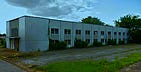
Weirdness at Greystone
Residue of Cult Activity in North Yonkers During the Early 20th Century

“A vast wonder began to fill me. What had been a complicated matter to begin with was now a labyrinth of complications.” – Howard Browne (writing as John Evans), Halo for Satan
On March 12, 1925, a female pedestrian was attacked by a vicious German Shepherd outside 22 Wicker Street in Yonkers (“Woman Attacked by Police Dog, Saved from Injury by Her Cloak,” Yonkers Statesman, March 13, 1925). That dog belonged to local restaurateur Harry Einhorn, who owned 22 Wicker at the time. I have previously cited this incident as indicative of suspicious activity in the neighborhood decades before the Yonkers cult is thought to have taken shape, and I suspected that similar occurrences eventually would emerge in the public record. If the cult was active as early as the 1920s, other odd incidents would have been documented—not odd in a general sense, but in a way that aligned with what is known about the cult’s practices at a later date, and occurring in the same one-mile radius. It was simply a matter of sifting through newspaper records and identifying them.
Such incidents were documented. I’ll examine them now.
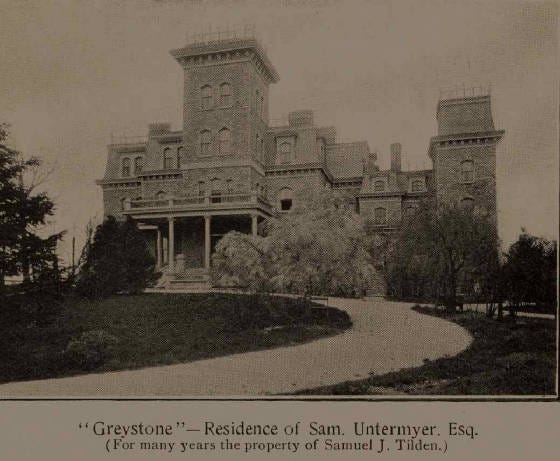
On March 16, 1928 (just a few days after the three-year anniversary of the German Shepherd attack outside 22 Wicker, strangely enough), nine-year-old Elizabeth Leach—the daughter of an employee at attorney Samuel Untermyer’s Greystone estate at 945 North Broadway—was bitten by Untermyer’s German Shepherd. Police said that the dog had escaped while its kennel was being cleaned. The German Shepherd was the most popular dog breed in the United States during the 1920s, largely due to Rin Tin Tin’s fame in silent cinema. German Shepherds were popular as family pets, not fearsome guard dogs; the breed’s reputation as “police dogs” was more closely associated with their intelligence and obedience rather than a tendency towards aggression. But it appears that the Shepherds owned by Harry Einhorn and Samuel Untermyer were trained to be aggressive. Were these animals serving as guard dogs, or had they been trained for some other, more obscure purpose? What happened to them after the biting incidents? Referring to the slain German Shepherds (two of which had been strangled) found some five decades later on the Old Croton Aqueduct Trail which ran directly alongside 22 Wicker Street and led straight to the Greystone property, Maury Terry observed that “German Shepherds don’t passively resist strangulation attempts” (The Ultimate Evil, pg. 193 of the 1989 paperback edition). In the cult’s warped theology, did the dogs’ strength and aggression make them more valuable as sacrifices?
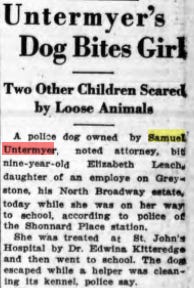
The most horrific of the three relevant news items occurred later in 1928. On November 12 of that year, the Statesman reported that the body of a baby boy, “stuffed into a worn valise,” had been found two days earlier behind a fallen tree “in the woods about 100 feet north of Odell Avenue near the Greystone estate of Samuel Untermyer”. Police examined the traveling bag and clothing, but found no clue as to the baby’s identity. The significance of this incident (which is known within the Son of Sam research community but rarely discussed, at least in my experience) is obvious.
The final item is a source of genuine mystification, and possibly alludes to the nature of the cult’s practices—or at least suggests why so much of the group’s activity occurred on or near the Greystone property. On July 21, 1922, it was reported that a marble statue had been unearthed on the Untermyer estate. Buried a foot below a water pipe that had been laid thirty-eight years earlier, the statue was discovered by a plumber and another laborer. “It was found,” read the uncredited story in the Statesman, “in three pieces: the head, broken off at the neck, a hand, broken off at the wrist, and the body of the figure on a pedestal about two feet square.” Esteemed sculptor and Yonkers resident Isidore Konti pronounced the statue a Greek original, and said that it was at least 2,000 years old. Samuel Untermyer was in Europe when the discovery was made—and, while photographer Rudolf Eickemeyer expressed his hope that Untermyer would place the figure “where every man, woman and child can see it,” reporters and other photographers were turned away at the time. (In a letter to the Statesman on January 31, 1923, Eickemeyer referenced Konti’s opinion that the statue represented Demeter, the Greek goddess of agriculture and fertility.)
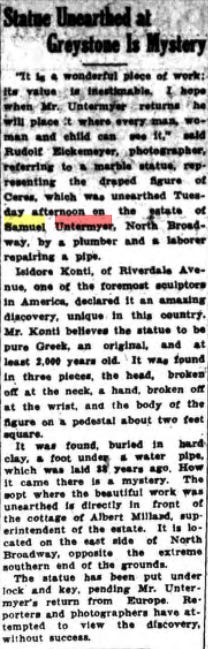
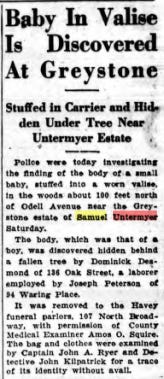
What became of the marble figure is unclear, and it seems never to have been exhibited or formally photographed. Because so little is known, it’s impossible to draw any firm conclusions about the statue. But if the initial newspaper report was correct, and the figure really had been buried beneath a water pipe laid thirty-eight years prior to its discovery, the incident becomes even more mysterious. This long predates Untermyer’s 1899 purchase of the Greystone property; in 1884, the estate was still occupied by former New York governor (and failed presidential candidate) Samuel J. Tilden. Had Tilden owned the statue? Was it destroyed by him, or by some other party? Why was no attempt made to repair the figure? Untermyer Gardens eventually incorporated numerous elements of Greek art and architecture (the earliest example appears to be Isidore Konti’s The Brook, a marble fountain figure placed at Greystone in 1906)—but, although Untermyer shared Tilden’s passion for horticulture, Tilden is not known to have had an interest in Greek sculpture.
Were the grounds at Greystone consecrated to pagan deities during the late nineteenth century? What was the ritual significance of the site? Whatever the answers to these questions may turn out to be, there is considerable circumstantial evidence that the same dark activities which made Yonkers infamous during the 1970s were already underway in the 1920s (or even earlier)—and in the same part of the city. That evidence should be further investigated.